Theodore’s Cathedral

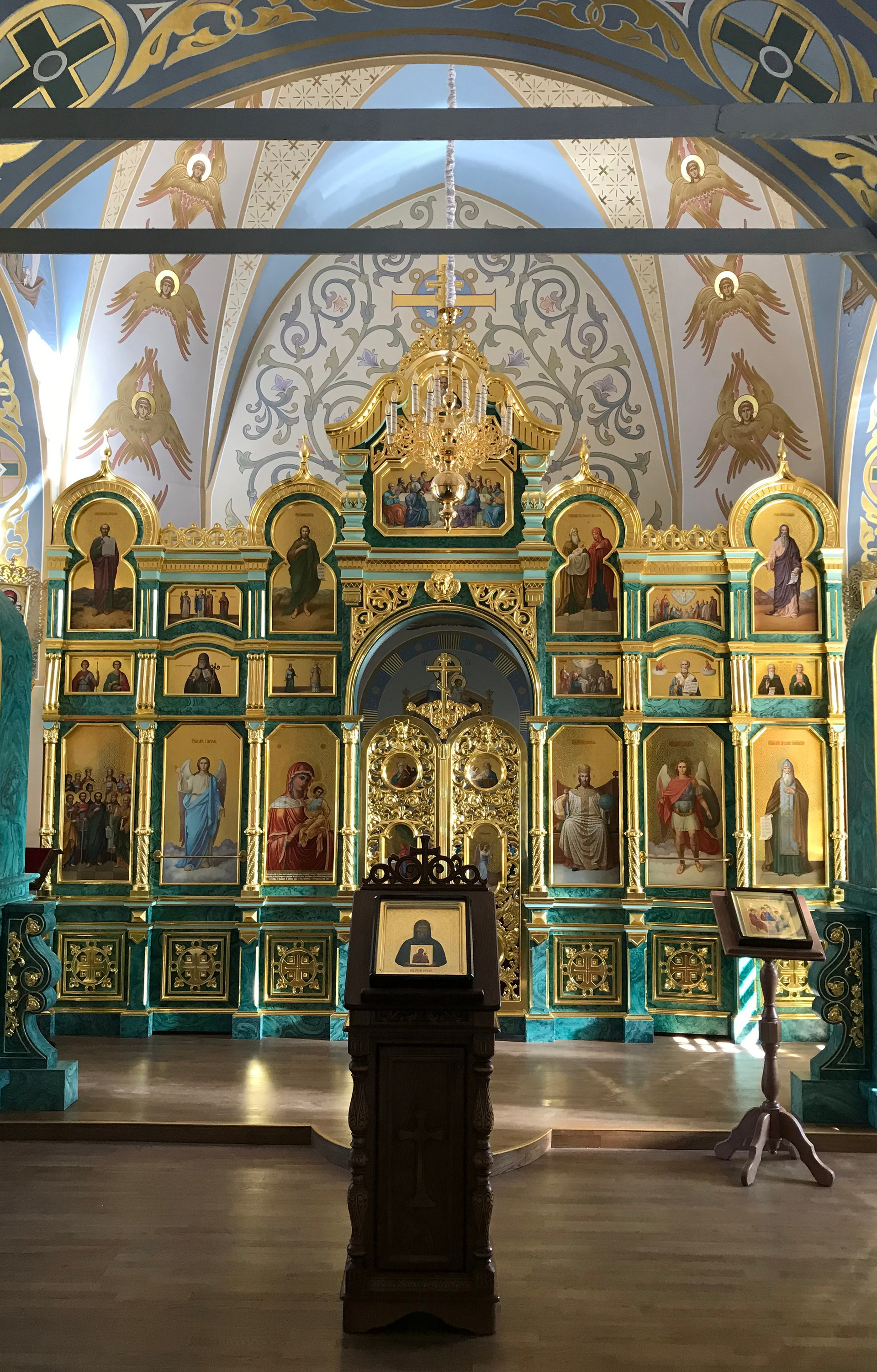
During the Great Patriotic War of 1941-1945, shelling destroyed the main dome, breached the walls of the northern and western facades, damaged the roof, and dismantled the main staircase; the archives burned. After the war, the lower church became a vegetable storehouse. In 1962, explosions destroyed the annexes, and the remains were used by climbers for training. Tsarskoye Selo Icon Painting Art Studio, under the direction and direct participation of Galina Mayorova, completely recreated the iconostases of the upper and lower churches, as well as all the icons in the cathedral’s interior, from 1999 to 2008 Highly artistic and archival research work was carried out. The icons of the upper iconostasis were painted from two black-and-white historical photographs. Built in Tsarskoye Selo, near St. Petersburg, between 1909 and 1912 by the architect V. Pokrovsky in the Russian style.


During the Great Patriotic War, it was severely damaged by German artillery shelling. It was restored by 1996 The Feodorovsky Cathedral was built by order of Tsar Nicholas II as a regimental chapel for His Majesty’s Own Convoy and the Combined Infantry Regiment. The Cathedral became the home chapel of the Emperor and his august family, where the great monarch prayed among officers and soldiers, hence its name “Sovereign.” It consisted of two churches: — the upper one with the main altar dedicated to the Feodorovskaya Icon of the Mother of God — the family icon of the Romanovs, and the lower one with the altar of St. Seraphim of Sarov. The cathedral was built as a symbol of Ancient Rus', reflecting the trinity of Church, Tsar, and People. The architecture, interior decoration, and even the clergy’s costumes were created in the Russian style. Experts in Russian antiquity contributed to the cathedral’s creation: Prince A. Shirinsky-Shikhmatov, Prince D. Golitsyn-Muravlin, Prince M. Putyatin, I. Romanov, K. Romanov, G. Romanov; Count S. Abamelek-Lazarev, Count P. Apraksin, Count A. Bobrinsky; artist N. Roerich; artist V. Vasnetsov; architect A. Shchusev; architect V. Suslov; artist I.Bilibin; architect S. Krichinsky; architect V. Maksimov; archaeologist V. Georgievsky; art historian N. Likhachev; A. Prakhov; artist M. Nesterov; philanthropist S. Eliseev; and others. Subsequently, the construction participants united in the “Revival of Artistic Rus' Society,” which became a center for the development of the Russian style. In the upper church, the interior and the enormous five-tiered iconostasis, 11 meters high, were crafted based on ancient 17th-century models. The Moscow icon-painting art studio of I. Yemelyanov and the Pashkov brothers, under the direction of V. Vasnetsov and N. Roerich, participated in their creation. A distinctive feature of the Sovereign’s Cathedral is that its icons depict the patron saints of all the Great Russian Tsars— Rurikovichs and Romanovs. Victor Vasnetsov drew up sketches of costumes for the Cathedral’s clergy and choir singers. By the time of World War I, only the lower church had been painted.


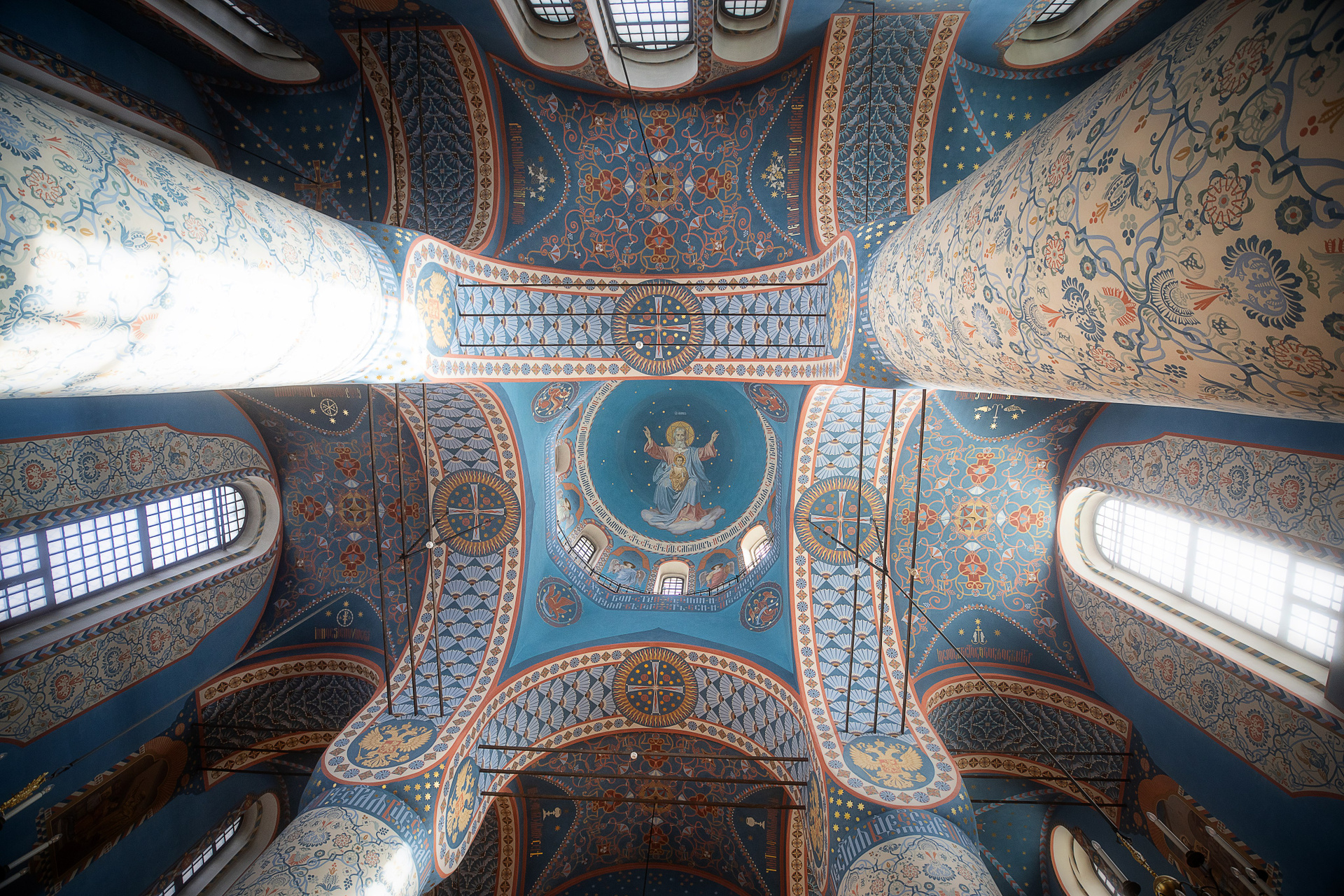
Cathedral of the Holy Great Martyr Catherine

The foundation of the Catherine Cathedral in Tsarskoye Selo was laid in 1835 by decree of Emperor Nicholas I. The design was created by architect Konstantin Thon. The Cathedral was consecrated on November 24 (December 6), 1840, in the presence of the Emperor and the heir to the throne, Tsarevich Alexander Nikolaevich. In 1939, the Cathedral was demolished by order of the Soviet authorities, and a monument to Lenin was erected in its place. The Cathedral’s restoration began in 2006. The foundation stone for the new Cathedral was laid on December 7, 2006, and construction was completed in 2010 On June 27, 2010, Patriarch Kirill performed the rite of great consecration of the restored Cathedral. Today, the Catherine Cathedral is an active church and one of the main landmarks of the Pushkin town. In June 2010, a creative team (from Tsarskoye Selo Icon Painting Workshop) restored all the icons in the Cathedral’s central iconostasis and installed them in their original locations. An iconographic program was developed based on old inventories of the 1930s confiscations. The iconostasis of the right aisle, dedicated to members of the family of Tsar Nicholas II, canonized in 2000, is decorated with icons of the Royal Passion-Bearers. The icons in the church’s interior were painted by the workshop based on historical inventories and private commissions from parishioners.


Church of St. John the Baptist
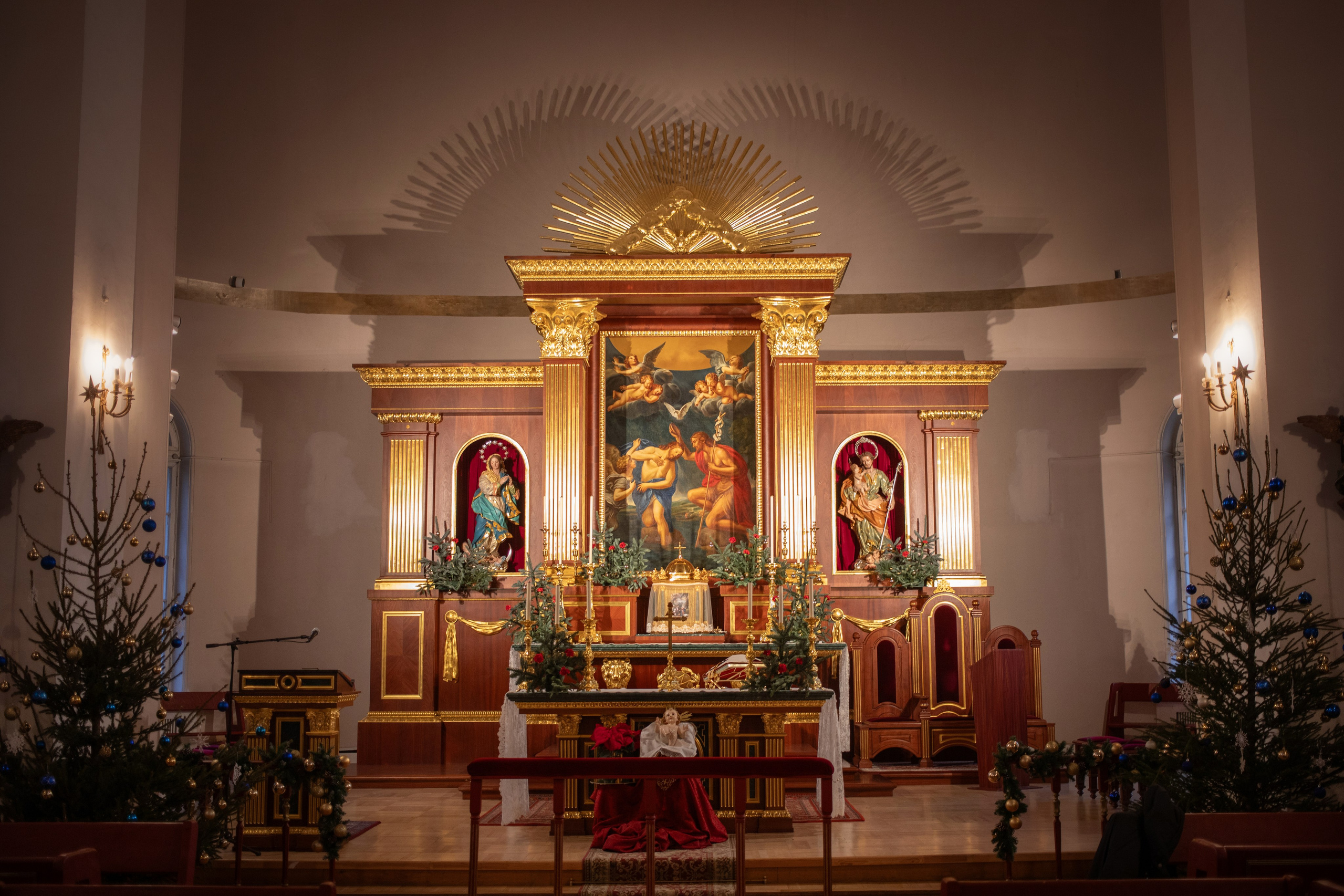
The history of the Catholic church dates back to 1811, when the first wooden chapel was built in the house of the court master of ceremonies, Osip Osipovich Mezonyaev. In 1825, Emperor Alexander I allocated land and funds, after which construction of the church began according to a design, by architects Leone and Domenico Adamini, with the participation of V.P. Stasov. In 1906-1908, the building was expanded according to a design by architect S.A. Danini. Services were held until 1938, when the church was closed by decision of the authorities. During the Great Patriotic War, the church was damaged but later was restored. The revival of parish life began on March 17, 1991, with the first service, attended byonly seven local Catholics. On July 24, 2006, the building was fully returned to the Catholic Church. After a ten-year restoration, a permanent altar was installed in the church on June 23, 2016, and a solemn consecration was held, marking a new beginning for the parish’s spiritual life. The Tsarskoye Selo Icon Painting Art Studio contributed to the church’s revival by painting fourteen standing paintings and icons of Mother of God Fatima. Church parishioners actively attend painting and icon painting classes taught by the workshop’s director, Galina Mayorova.


Church of St. Sergius of Radonezh in Tsarskoye Selo

The Church of St. Sergius of Radonezh in Tsarskoye Selo was built in 1889 according to thedesigns of the architect Alexander Uspensky in the Russian-Byzantine style. In 1904, the church was solemnly consecrated in the presence of Emperor Nicholas I. The interior was decorated with 17th-century paintings, a carved oak iconostasis, and church vessels crafted in the Russian style. After the Revolution, in 1921, the church was closed. During the Great Patriotic War, it was severely damaged, and in the 1970s, it was rebuilt as adriving school. In 2012, the church was handed over to the faithful. Tsarskoye Selo Icon Painting Art Studio, reviving the traditions of Christian art, carefully studied historical sources and archival documents. The frescoes on the northern and southern walls were painted from the author’s sketches, featuring iconographic scenes: the vision of the elder to the youth Bartholomew and the blessing of St. Sergius and Dmitry Donskoy with his army at the Battle of Kulikovo. A special iconographic program and artistic style were developed for the icons on the church walls. Patriarch Kirill highly praised the workshop’s work for recreating the church’s original artistic image.


Old Chalet

Old Chalet is one of the first buildings in the Pavlovsk Palace and Park complex, erected in the 1780 s according to the designs of Charles Cameron. The pavilion imitated a rural hut with timber-framed walls, a thatched roof, and a bell tower. Interior paintings included the walls, a ceiling with three putti in the central hall, and a wall depicting a colonnade in perspective.
In 1931, the pavilion burned down, and during the Great Patriotic War, it was completely destroyed. Plans for its restoration were completed in 2024–2025. The project sought to maximize the historical appearance based on surviving documents, watercolors, and photographs. The alfredo murals on the walls, the painted ceiling, and the floral bouquets painted on six mirrors created a unique atmosphere reminiscent of a palace interior and expansive spaces. The Art Studio team completed the work with high professionalism in a short timeframe, earning high praise from experts.


Konevsky Monastery of the Nativity of the Virgin Mary.
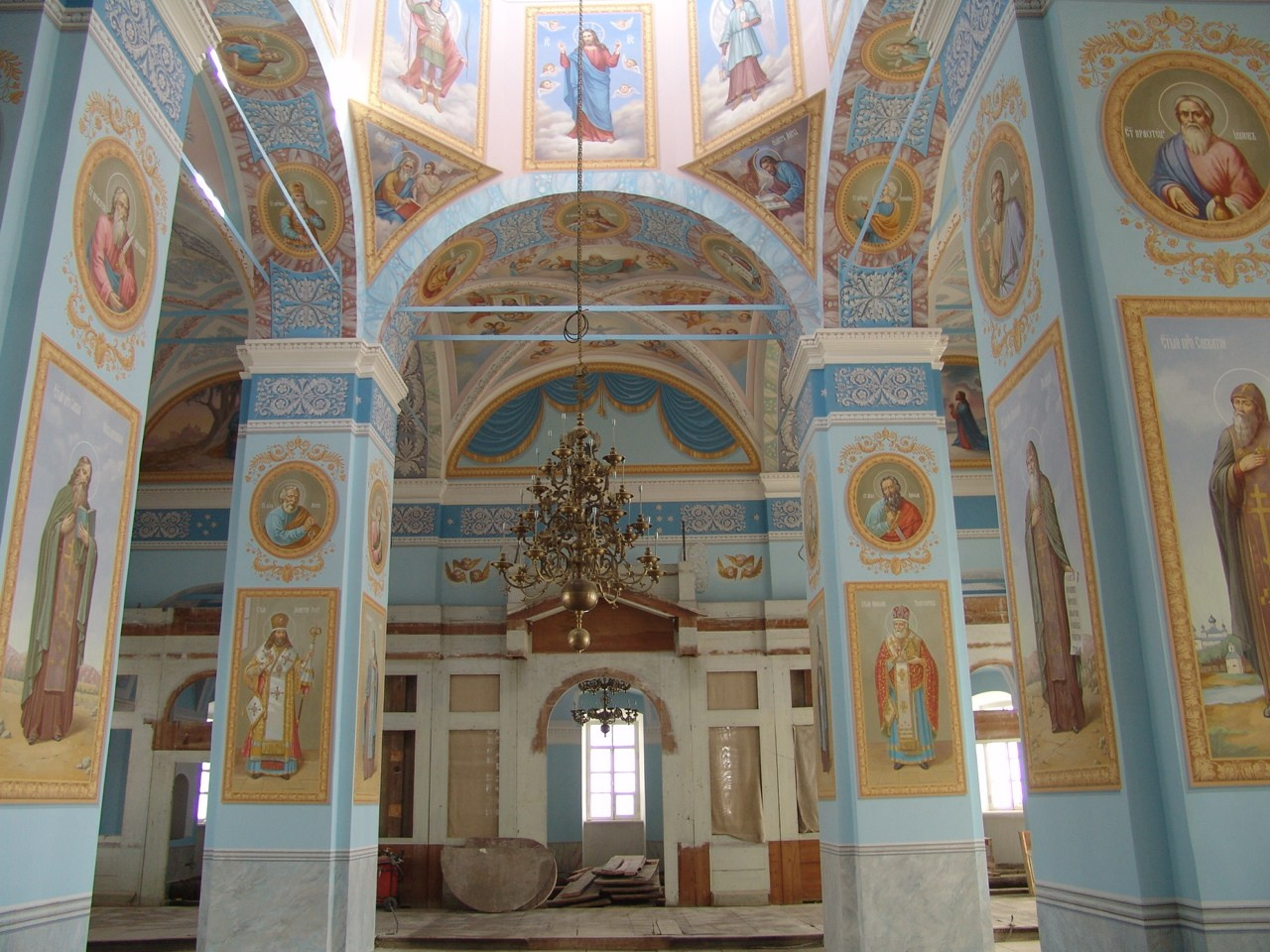
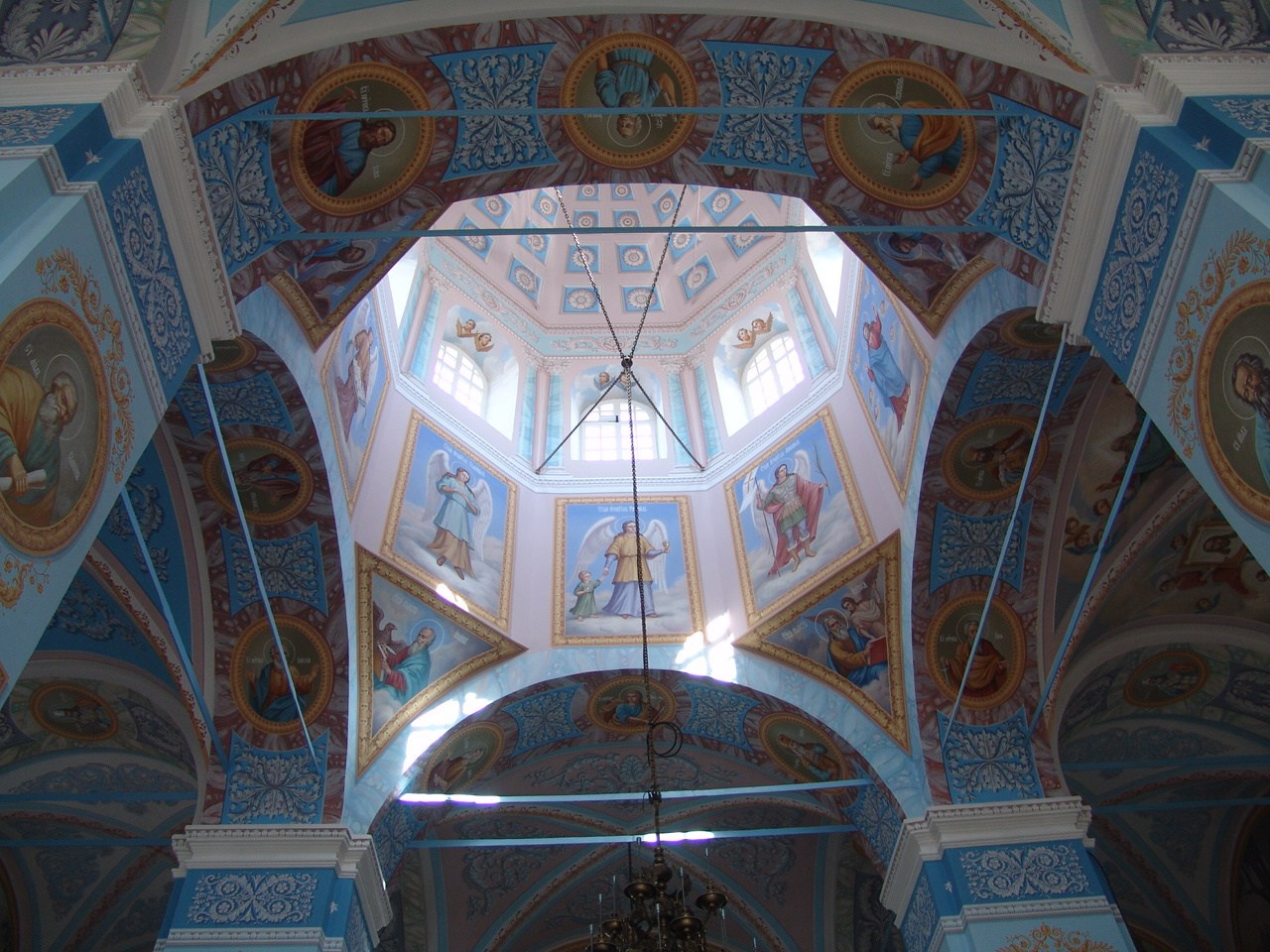
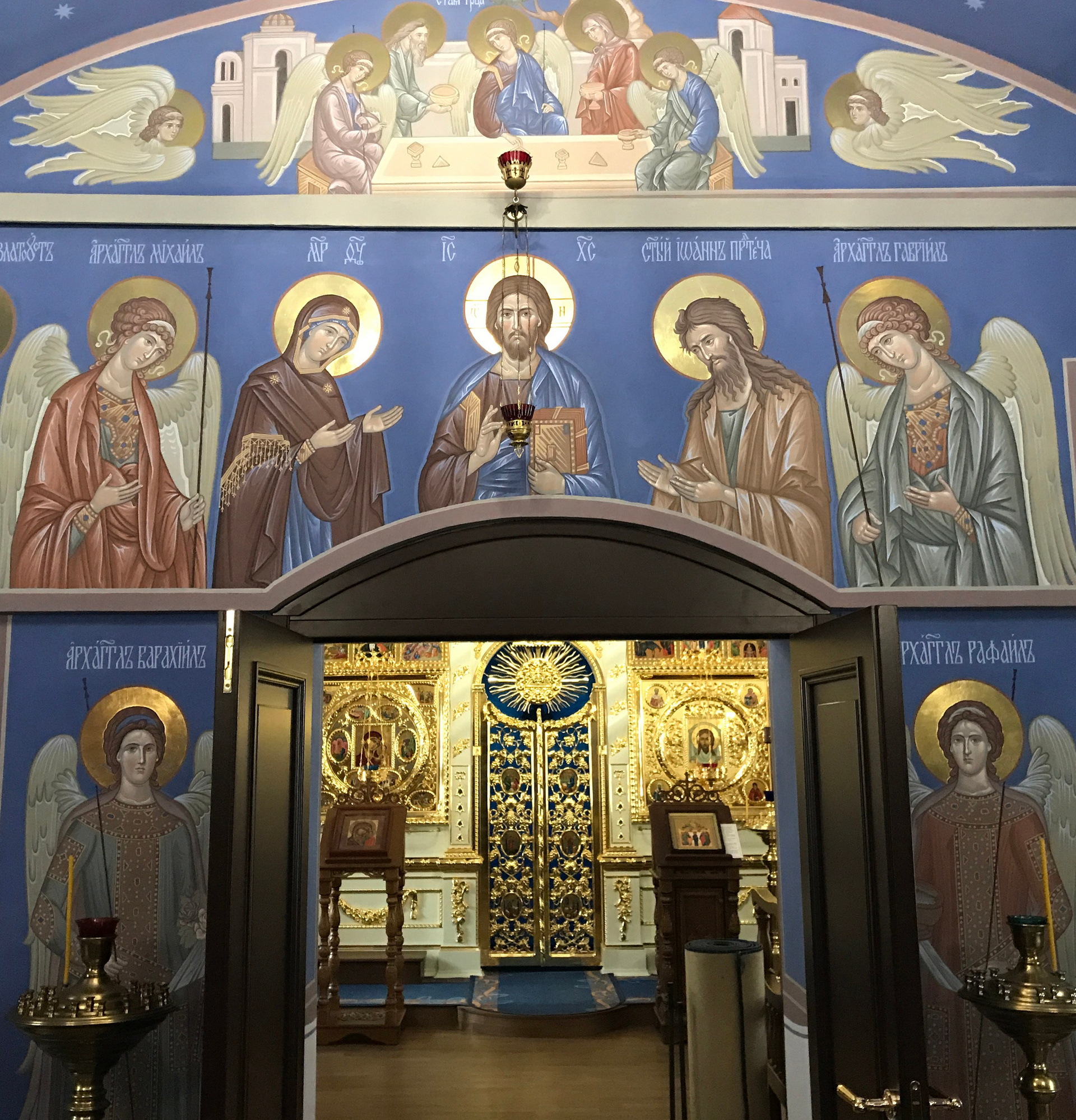
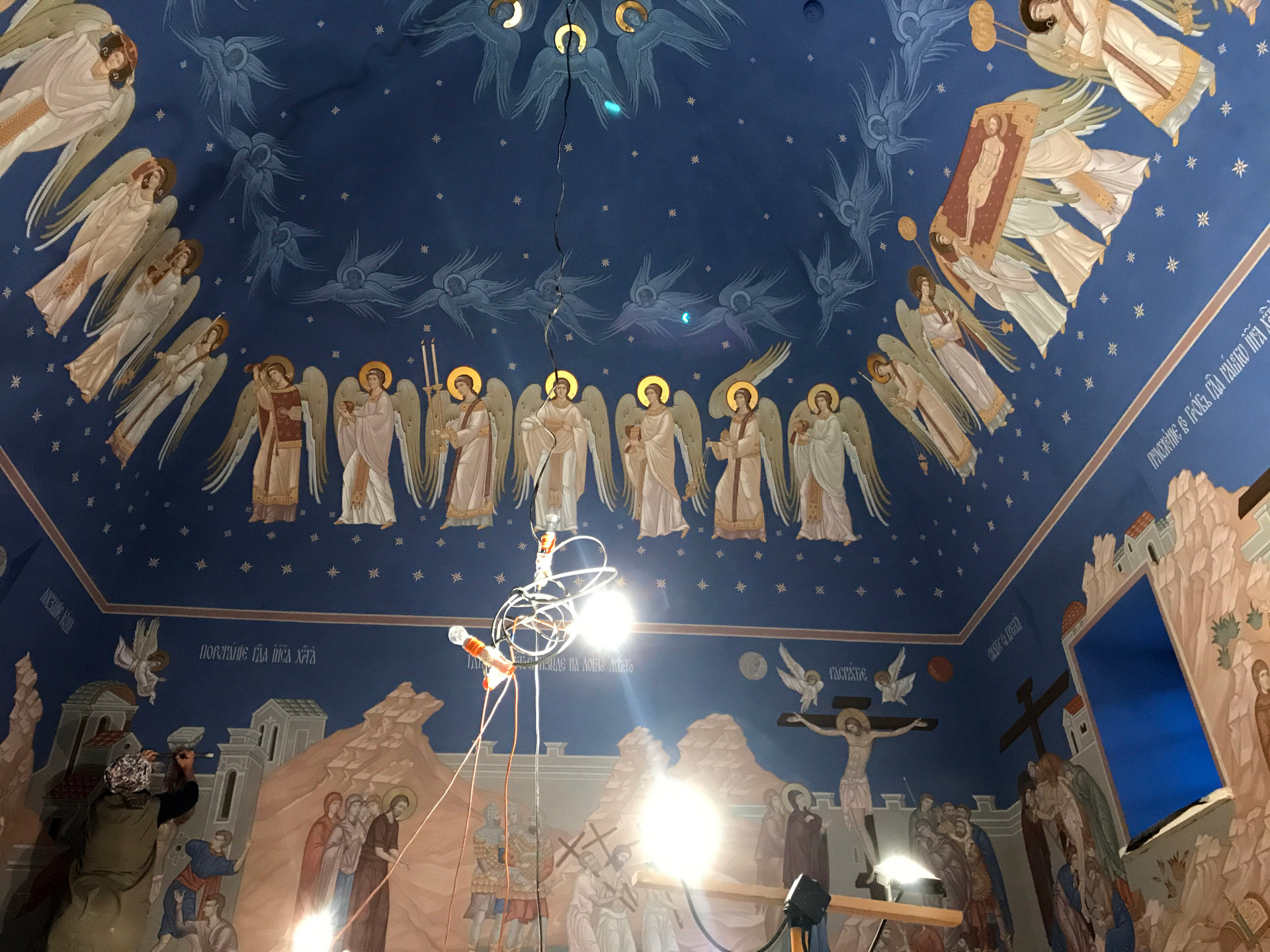
Konevsky Monastery is a cloister on Konevets Island in the western part of Lake Ladoga. It was founded in 1393 by St. Arseny Konevsky. In 1398, the first stone church of the Nativity of the Virgin was erected. The monastery was destroyed by the Swedes in 1577 and 1610 but was later revived during the reign of Peter the Great. In the 19th century, the monastery was visited by Emperor Alexander II. During this era, the walls were adorned with murals, a shrine for the relics of St. Arseny and new church utensils were created. Between 1918 and 1939, the island belonged to Finland. The monastery buildings were damaged during the wars of 1939-1940 and 1941-1944. The monastery was returned to the Russian Orthodox Church in 1991, the relics of St. Arseny were recovered, and large-scale restoration work has been carried out since 2016 In the period from 2018-2021, specialists from the Tsarskoye Selo Icon Painting Art Studio painted six churches of the monastery and revived the frescoes of the monastery’s main entrance gate.
Murals were recreated in the following churches:
1 The Upper Main Church of the Nativity of the Virgin.
2 The Lower Church of the Presentation of the Lord (Sretensky).
3 The Konevsky Church.
4 St. Nicholas Church. (Nikolskaya)
5 The Church of the Konevskaya Mother of God in the Konevsky skete. 6 The Kazan Church in the Kazan Skete.






Works completed by the Art Studio from 1995 to 2026:
* Icons for churches in St. Petersburg, the Leningrad Region, and abroad
* Iconostasis of the Church of Mother of God of Kazan in the village of Aleksandrovka, Pushkin
* Iconostasis of the Church of Mother of God of Kazan at the Krasnenkoye Cemetery in St. Petersburg
* Iconostasis of the Church of St. Olga, Equal-to-the-Apostles, at the Railway Hospital in St. Petersburg
* Iconostasis of the Church of the Holy Princes Boris and Gleb, Agalatovo (Leningrad Region)
* Iconostasis of the Cave Church of St. Seraphim of Sarov, Theodore’s Cathedral, Pushkin
* Iconostasis of the Upper Church of the Theodore’s Cathedral, Pushkin
* Icons for the Church of St. Xenia of Petersburg, Rostock (Germany)
* Icons for the Church of the Resurrection, Berlin (Germany)
* Icons for the Church of the Resurrection, Brisbane (Australia)
* Iconostasis of the Smolensk Church, Pogi (Leningrad Region)
* Central and side iconostases in St. Catherine’s Cathedral in Tsarskoye Selo
* Iconostasis of the lower church of the Cathedral of St. Athanasius and Theodosius of Cherepovets, Cherepovets
* Painting of the Church of St. Nicholas, Lutsino, Zvenigorod (Moscow Region)
* Painting of the skylight of the Church of St. Boris and Gleb, Agalatovo (Leningrad Region)
* Painting of the Church of St. Sergius of Radonezh Church in Tsarskoye Selo
* Iconostasis and icons of the Church of St. Sergius of Radonezh in Tsarskoye Selo
* Sketches of ceiling paintings in the Feodorovsky Russian town in Tsarskoye Selo
* Restoration of wall paintings in the Church of the Holy Spirit of the Trinity Lavra of St. Sergius.
* Exterior paintings of the Dormition Church in Baryshevo, Leningrad Region
* Paintings of the Church of St. Sergius of Radonezh in Gubino, Moscow Region
* Paintings of the Ascension Chapel in Voznesenie, Leningrad Region. Restoration of church icons and the iconostasis of the Church of the Descent of the Holy Spirit in Magadan, 2015 Project: recreation of paintings in the Church of the Mother of God of Mercy, Arch. Kosyakova in St. Petersburg 2015 Festive row in the iconostasis of a church in the Moscow region
* Iconostasis of a church in the village of Pasha, Leningrad Region
* Painting of the altar and dome of the Church of St. Sergius of Radon in the village of Porechye, Tver Region
* Recreation of the iconostasis of the Church of the Intercession of the Mother of God at the Nikolo-Klobukovsky Monastery in Kashin. Painting of the Church of the Nativity of the Virgin Mary in Moscow, Kulishki
* Iconostasis of the Church of the Konevskaya Mother of God in the skete, Konevets Island
* Painting of the upper Church of the Nativity of the Virgin Mary, Konevets Island
* Painting of the Chapel of the Kazan Mother of God in the village of Meleksa
* Painting of the staircase and lower Church of the Nativity of the Virgin Mary, Konevets Island.
* Painting of the Church of St. Nikolay, Konevsky Nativity of the Virgin Mary Monastery (2017- 2021)
* Iconostasis and frescoes at the Kazan Skete, Konevets Island
* Frescoes at the Arsenyev Church, Konevets Island
* Iconostasis and frescoes at the Konevsky Skete, Konevets Island